
When AI can act like independent experts in real time and lightens everyday life.

Runtime for AI Agents on FHIR®

AI in Digital Health – soon indispensable

It is becoming clear: Self-determined patients can prepare digitally and go where AI agents provide independent expertise. Qualified clinical staff also go where modern technology lightens everyday life.

Studies show: Missing infrastructure — not model quality — is the primary barrier to widespread AI adoption in healthcare. For AI to work in practice worry-free, it needs a technical foundation. Essential requirements decide whether AI becomes truly supportive — or remains just another shiny demo:

Performance

Speed that matches cognitive processes — For AI to assist and support workflow, needed information should be available, without noticeable pause (ideally under ~70 ms(*)). High-performance and real-time are achieved through analysis and consistent reduction of overhead. Independent plugins enable evaluation of different approaches within a short time – scientific approach instead of superficial functionality, with consideration of technology and resource consumption.

Reliability

Reliable answers through clear, established standards — Data needs unambiguous, reproducible structures. Cleanly modeled information enables stable results. Standards only work when implemented consistently — not creatively.

Flexibility

Systems that can be flexibly extended — Digital Health evolves quickly, AI even faster. Studies identify barriers and risks in AI implementation that can be addressed through flexible architectures. This may require architectures that can clearly delimited, low-risk, and predictable integrate new functions. This can help keep technology future-proof and growing with requirements.

Security & Governance

Security that can handle complexity — digital health data requires consistent protection. Governance gaps can affect long-term safety and effectiveness of AI. AI can be used responsibly when access rights are clearly defined and systems are logically separated. This can enable trust — a foundation for AI integration.

(*) Scientific sources on cognitive processes and perception thresholds (threshold varies by context): Moutoussis & Zeki (1997): Perceptual asynchrony – perceptual asynchrony between visual attributes (color vs. motion) at ~70-80 ms; Hadjiosif et al. (2025): Tiny visual latencies can profoundly impair implicit sensorimotor learning – delays between 25-85 ms have measurable effects on implicit learning; Card, Moran & Newell (1983): Human Processor Model – cognitive processing steps at ~70 ms.

Our answer: a Runtime for AI Agents on FHIR®

HealthRuntime™ by atollee is an environment built for speed matching cognitive processes, reliable data structures, flexible extensibility, and security that handles complexity.

One stack, one team, one source of truth for technical and non-technical decisions — on TypeScript consistent from device to cloud, backend to frontend. Plugin-first architecture — adaptable to requirements, designed for vibe-coding of custom plugins. Community specifications as verified plugins — available as soon as published. Validation and terminologies where it matters. 🔥 FHIR® R6 ready — the specification of tomorrow.

No EHR. No platform.
A runtime for interoperability and AI-powered applications.

Where HealthRuntime™ is positioned:

HL7® (OSI Layer 7 – FHIR® Specification: Resources, Data Types)
HealthRuntime™ (Runtime layer on plugins – APIs, tools, optimized for Agentic AI)
AI Agents / Applications

HealthRuntime™ – for Various Domains

Addresses different stakeholders in healthcare – from IT teams and developers to clinics and research, to companies and organizations. Each domain benefits from the same core principles: Performance, Reliability, Flexibility, and Security.

For IT Teams

  • Standards & Governance: FHIR®-compliant, auditable, Zero Trust architecture
  • Efficiency: Federated, networked architecture – open and distributed
  • Quality: Deterministic, traceable results
  • Cost: Gradual modernization reduces risks and costs, access to complete FHIR® specification on modern stack

For Clinics & Doctors

  • Relief: AI agents can take over administrative tasks – one of many options for support and relief
  • Support: Contextual decision aids
  • Time: More time for patients through efficient support
  • Trust: Traceable, explainable AI support

For App Developers and Patient Solutions

  • FHIR® Specification: Fully usable for interoperable apps
  • Rapid Development: Standards-based APIs and tool interfaces
  • Security: Zero Trust, RBAC and audit trails
  • Scalability: Edge-first to cloud, flexible deployment

For Other Industries

  • Research: Structured data for studies & analyses
  • Pharma: Standardized data exchange & structured validation
  • Insurance: Interoperable interfaces & validation
  • Public Health: Scalable infrastructure for population health

What HealthRuntime™ Delivers, Among Other Things

Supports the gradual transition to modern infrastructures parallel to existing core systems. Side-by-side approach – learning from the leaders – enables modernization of proven systems without risk to ongoing operations – while simultaneously enabling innovation. Allows everyone to innovate at their own pace, while users gain more power to discover what works.

Side-by-side to Core Systems

Runs parallel to existing core systems – without disrupting them. Side-by-side approach, proven in practice as SAP demonstrates – enables innovation alongside legacy, without upgrade risk for core systems. Allows everyone to innovate at their own pace, while users gain more power to discover what works.

Federated, Networked Architecture

Federated, networked architecture – not monolithic, but open and distributed. Enables AI agents to access information close to the data source with minimal latency – edge-first processing.

Security & Governance

Zero Trust as a design principle and FHIR®-conformity as foundation. Architecture with zero-trust design, RBAC, policies, audit trails and observability — so automated recommendations remain traceable and accountability is clearly defined. Support for compliance requirements (EU AI Act, MDR, GDPR) through structured data, audit trails, and governance mechanisms.

Future-Proof

Based on the FHIR® specification – enables vendor independence. Modular architecture through plugin architecture – extensions without downtime, flexible integration of new functions, and seamless scaling.

Infrastruktur: Edge-first bis Cloud/Serverless

FHIR® expertise is built-in — ready for what's next.

A foundation is future-proof when it enables change. HealthRuntime™ combines standards fidelity with modular architecture — flexible and adaptable.

Plugin-first architecture — open for existing resources and environments: on-device, at the edge, in clusters, in the cloud or serverless.

Digital health requires breadth and depth. HealthRuntime™ provides building blocks to implement requirements quickly and responsibly — agent-friendly in development and optimized for agentic AI. Teams gain time — and patients receive reliable, everyday support. Best-of-breed approach with collaborative mindset: systems work together and complement each other.

Interoperable Infrastructure & Scalable

Interoperable Infrastructure

HealthRuntime™ supports building interoperable infrastructure – based on the FHIR® specification. Enables seamless data exchange between systems and creates the foundation for future-proof digital health solutions.

Scalable, Modern Approach

On-site development, rapid prototyping with approaches like Vibe-Coding, and seamless transition to production environments. FHIR® specification (R6-ready) and plugin architecture enable flexible development with standards-based validation, vendor independence, and control over data and systems. From idea to production – traceable and without lock-in.

Agentic AI: Multimodal – HL7 FHIR® Kontext, DICOM-Bilddaten, gesteuert via Tools & Policies

Agentic AI — easing everyday work, empowering people.

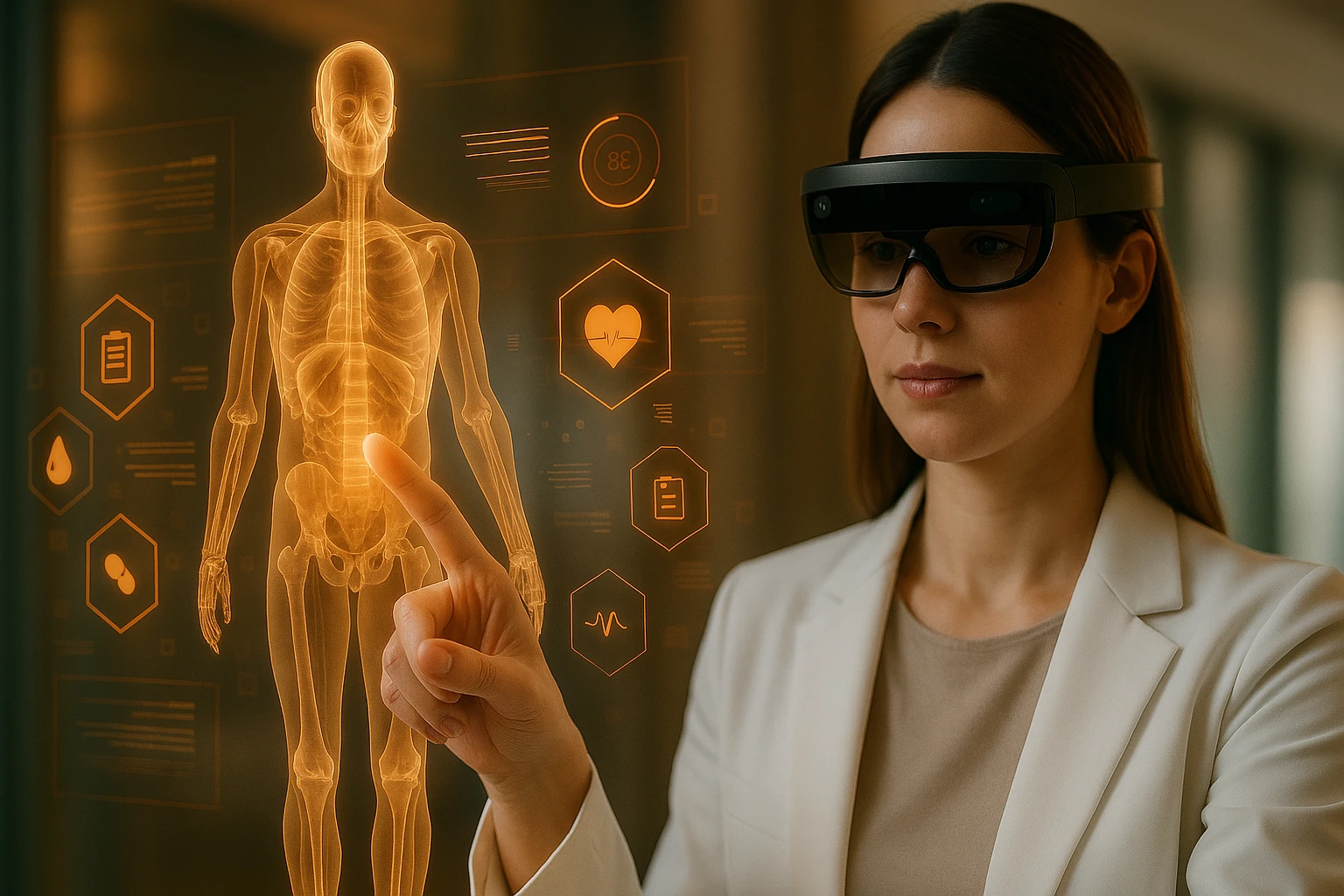
Agentic AI stands for context-aware automation: specialized agents support tasks in a rule- and context-guided way — based on contemporary methods and in dialogue with users.

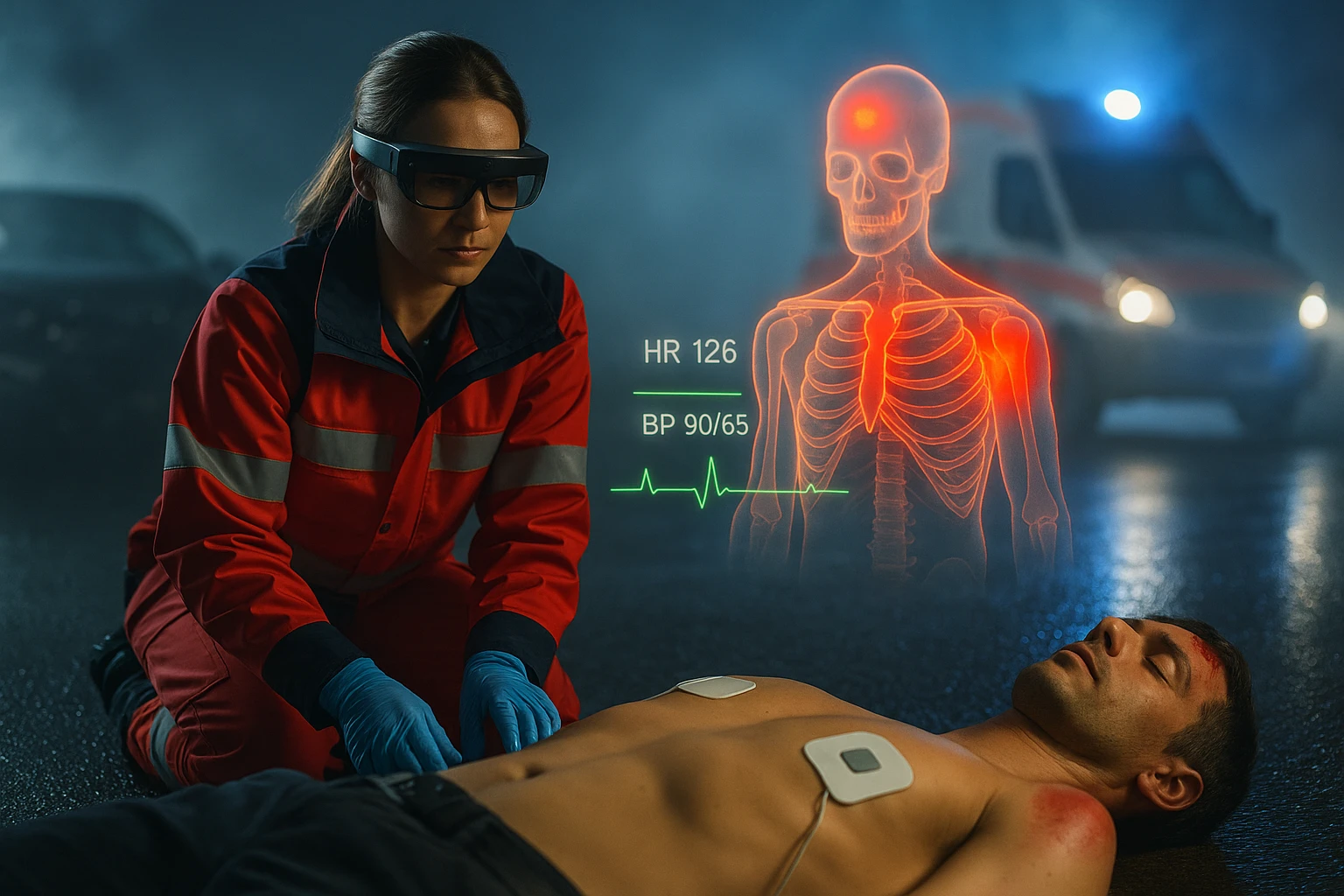
Visionary application: Medical support at the scene of an incident — vitals, surroundings, and sensor-enhanced situational data processed live, with full context. AI Agents deliver actionable insights directly in view — even offline or when fast decisions are essential. Technical developments such as audio/visual feedback and hands-free (AR/XR) make this possible.

Digital Health needs standards, speed, and contemporary architecture.
Let's act.